Home / Sleep Disorders / Obstructive Sleep Apnea
Sleep disorders we treat
Transform Your Life with Online Sleep Apnea Doctor Treating Sleep apnea and Excess Weight
Dr. Sangal is an online sleep apnea doctor who uses 2 treatments together to prolong your life. Treating the sleep apnea and excess weight loss together transforms your life by relieving your symptoms and helping you live healthier and longer.
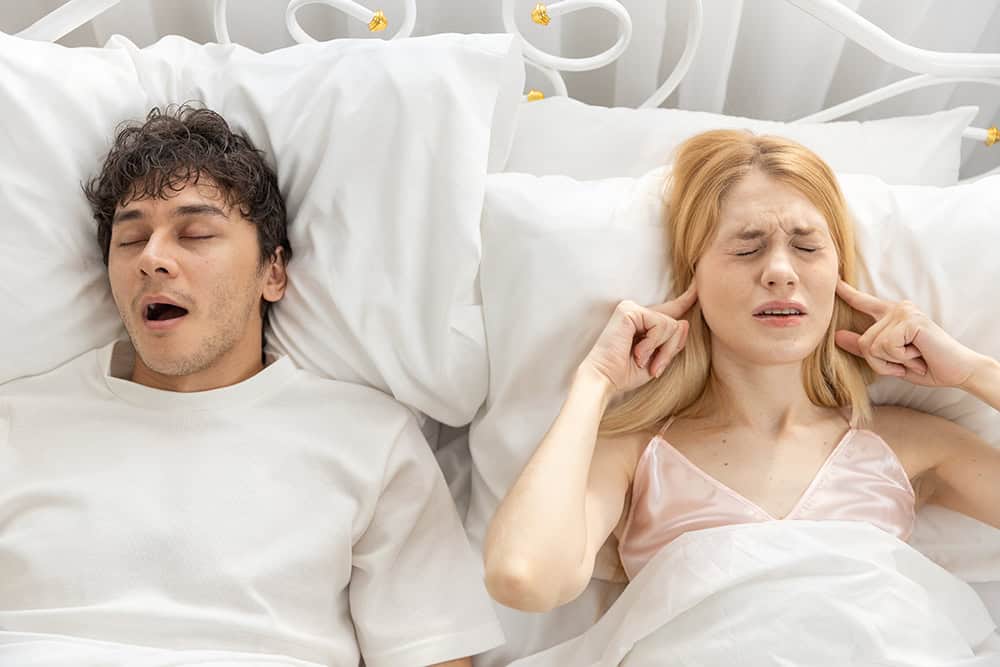
Obstructive sleep apnea, or OSA, is a sleep disorder in which breathing repeatedly slows or stops during sleep because the upper airway becomes narrowed or blocked. These pauses in breathing are called apneas; partial reductions in airflow are called hypopneas. OSA is common, underdiagnosed, and often causes symptoms such as loud snoring, choking or gasping during sleep, unrefreshing sleep, daytime sleepiness, fatigue, and poor concentration. Overweight and obesity cause and worsen sleep apnea. Sleep apnea is associated with increased cardiovascular disease and deaths.
What is obstructive sleep apnea?
Sleep apnea refers to pauses in breathing during sleep. In OSA, the breathing effort continues, but the throat closes or narrows enough to reduce airflow. This is different from central sleep apnea, where breathing effort itself stops.
OSA severity is usually measured by the apnea–hypopnea index, or AHI:
- Mild OSA: AHI 5 to 15 per hour
- Moderate OSA: AHI 15 to 30 per hour
- Severe OSA: AHI greater than 30 per hour
Hypopnea definitions and diagnostic technology have changed over time. This has resulted in many individuals who would previously have been considered normal now being diagnosed with sleep apnea, and individuals who would have been considered to have mild-to-moderate OSA now being considered to have moderate-to-severe OSA. Because these definitions have changed, sleep study results are not always directly comparable across laboratories or across older reports. Dr. Sangal, online sleep apnea doctor, can help interpret your previous test results or do a home sleep test.
Why does obstructive sleep apnea happen?
OSA usually happens because the upper airway becomes too narrow during sleep. Common reasons include:
- Excess tissue in the throat
- Fat deposits around the throat or base of the tongue
- Reduced muscle tone in the airway during sleep
- Alcohol or other substances that relax the airway
- A lower arousal threshold in sleep
- An exaggerated ventilatory response to small changes in blood carbon dioxide
- Excess weight
In many patients, more than one factor contributes to OSA. Dr. Sangal, online sleep apnea doctor, can help determine which factors are important in your case.
Symptoms of OSA
OSA can cause:
- Loud snoring
- Witnessed pauses in breathing
- Gasping or choking during sleep
- Excessive daytime sleepiness
- Fatigue
- Morning headaches
- Brain fog
- Reduced concentration
- Impaired work or school performance
- Nonrestorative sleep
Some patients are sleepy, while others mainly notice fatigue, poor focus, or waking unrefreshed. Dr. Sangal, the online sleep apnea doctor, can help you with these symptoms.
How is OSA diagnosed?
OSA is diagnosed with a sleep study, either an in-lab polysomnogram or a home sleep apnea test. The diagnosis is based on the number of breathing events during sleep, along with symptoms and clinical context.
Online Sleep Apnea Doctor Treatment options
Treatment depends on symptom severity, OSA severity, and patient goals.
CPAP
CPAP — continuous positive airway pressure — is the most effective treatment for OSA. CPAP is the term used when the pressure is kept fixed. When the device changes the pressure on its own through the night, it is called APAP (auto-titrating positive airway pressure). When the pressure is higher when inhaling and lower when exhaling, it is called BPAP or BiPAP (bilevel positive airway pressure).
PAP devices keep the airway open during sleep and can reduce the AHI to below 5 per hour in many patients. However, patients often do not like CPAP because of the mask pressure, dry mouth, and worsening of sleep with more arousals and awakenings [1], and the arousals and awakenings are even worse with APAP [2] . Adherence with CPAP use is often poor [3] . Adherence and improvement in sleepiness may be better after a switch from APAP to CPAP [4] .
PAP is especially helpful when OSA causes:
- daytime sleepiness
- fatigue
- brain fog
- impaired functioning
However, CPAP does not improve cardiovascular or metabolic outcomes [5-7]. In low-risk patients, CPAP may even worsen cardiovascular outcomes [8]. Sleep apnea doctors often focus on CPAP alone, but CPAP alone is not enough and may even be harmful. Dr. Sangal, the online sleep apnea doctor, can help treat with weight loss and with CPAP (if necessary).
Oral appliances
Oral appliances can be helpful for some patients. These devices move the lower jaw forward and can reduce airway collapse during sleep. They may improve OSA, but usually do not control it as completely as CPAP.
Surgery and implants
Some patients may benefit from surgery or from newer implant-based treatments, including hypoglossal nerve stimulation. These options may reduce OSA severity in selected patients, but they generally do not control OSA as completely as CPAP.
Weight loss and OSA
Excess weight is one of the most important contributors to OSA. Weight loss often improves OSA with a 10% body-weight loss, though it does not eliminate it; a 25% body-weight loss may resolve the OSA [9] .
For patients who are overweight or living with obesity, weight loss can be an important, and often sufficient, part of treatment. In many patients, reducing excess weight may lessen the severity of OSA and reduce symptoms. Dr. Sangal, the online sleep apnea doctor board-certified in both sleep medicine and obesity medicine, can help transform your life.
Online Sleep Apnea Doctor Treats Sleep Apnea and Overweight/Obesity Together
Dr. Sangal, the online sleep apnea doctor, treats the sleep apnea with CPAP in order to improve sleepiness and daytime function. National statistics show that 59% of patients prescribed CPAP are able to use it. In his previous practice, 85-90% of his patients were able to use CPAP with Dr. Sangal’s help, as shown in his published peer-reviewed papers. Dr. Sangal also treats excess weight/obesity in order to improve cardiovascular and metabolic outcomes. Enough weight loss may even allow discontinuation of the CPAP.
Why OSA matters
OSA can affect quality of life, daytime alertness, and daily functioning. Even when the condition is mild, it may still cause sleepiness, fatigue, poor focus, reduced performance, and unrefreshing sleep. For patients who have daytime impairment or high-risk OSA, treatment is especially important. Dr. Sangal, the online sleep apnea doctor, can help.
Conclusion
- The definition of OSA has evolved over time, resulting in more individuals being considered to have OSA.
- OSA, even mild, can cause daytime sleepiness, fatigue, cognitive dysfunction, and impaired functioning.
- OSA, especially severe, is associated with worse cardiovascular and metabolic outcomes.
- CPAP controls OSA very well and often reduces daytime symptoms, but does not improve cardiovascular or metabolic outcomes.
- Other treatments (oral appliances, surgery, hypoglossal implants) improve but do not control OSA.
- Weight loss improves (but may not control) OSA, and is associated with improved cardiovascular and metabolic outcomes.
- If there is daytime impairment or high-risk OSA, the best treatment is probably CPAP along with weight loss.
- If there is no daytime impairment and the OSA is low-risk, the best treatment is probably weight loss; the role of CPAP is less certain.
How our practice can help
Our self-pay telemedicine practice provides individualized care for patients with suspected or confirmed obstructive sleep apnea. Dr. Sangal, the online sleep apnea doctor, can help with:
- Symptom review
- Sleep apnea risk assessment
- Sleep study review
- CPAP-related counseling
- Weight management when OSA and obesity overlap
- Follow-up care and treatment planning
Frequently asked questions
Obstructive sleep apnea is a sleep disorder in which the throat narrows or closes during sleep, causing repeated pauses or reductions in breathing.
Common symptoms include loud snoring, gasping during sleep, daytime sleepiness, fatigue, brain fog, and poor concentration.
OSA is diagnosed with a sleep study, either at home or in a sleep lab.
CPAP is the most effective treatment for controlling OSA.
They may help selected patients, but usually do not control OSA as completely as CPAP.
Yes. Weight loss often improves OSA, though it may not fully resolve it. Unlike CPAP, weight loss also improves cardiovascular and metabolic outcomes.
References
- Ulander M, Johansson MS, Ewaldh AE, Svanborg E, Broström A. Side effects to continuous positive airway pressure treatment for obstructive sleep apnoea: changes over time and association to adherence. Sleep Breath. 2014;18:799–807. PubMed
- Fuchs FS, Wiest GH, Frank M, et al. Auto-CPAP therapy for obstructive sleep apnea: induction of microarousals by automatic variations of CPAP pressure? Sleep. 2002;25:514–518. PubMed
- Weaver TE, Sawyer AM. Adherence to continuous positive airway pressure treatment for obstructive sleep apnoea: implications for future interventions. Indian J Med Res. 2010;131:245–258. PubMed
- Sangal RB, Sudan N. Baseline lighter sleep and lower saturation are associated with improved sleepiness and adherence on continuous rather than autotitrating positive airway pressure. Clin EEG Neurosci. 2020;51(3):174–179. PubMed
- Yu J, Zhou Z, McEvoy RD, et al. Association of positive airway pressure with cardiovascular events and death in adults with sleep apnea: a systematic review and meta-analysis. JAMA. 2017;318(2):156–166. PubMed
- Elbadawi A, Elgendy IY, Shnoda M, et al. Impact of continuous positive airway pressure ventilation on cardiovascular outcomes among patients with obstructive sleep apnea: a meta-analysis of randomized trials. Am Heart J Plus. 2021;11:100056. PubMed
- Feltner C, Wallace IF, Aymes S, et al. Screening for obstructive sleep apnea in adults: updated evidence report and systematic review for the US Preventive Services Task Force. JAMA. 2022;328(19):1951–1971. PubMed
- Azarbarzin A, Vena D, Esmaeili N, et al. Cardiovascular benefit of continuous positive airway pressure according to high-risk obstructive sleep apnoea: a multi-trial analysis. Eur Heart J. 2026;47(17):2077–2089. PubMed
- Dandamudi M, Lucena L, Gamarra-Valverde NN, et al. Efficacy of GLP-1 receptor agonists in treating obstructive sleep apnea: a systematic review and meta-analysis of cardiometabolic and respiratory outcomes. Sleep Breath. 2026;30:138. PubMed
Take the next step
If you snore, wake up gasping, feel unrefreshed, or struggle with daytime sleepiness or fatigue, a telemedicine visit can be a practical first step toward answers.
Self-pay · Telemedicine for residents of California, Massachusetts & Michigan