
Home / Obesity & Overweight / Obesity & Metabolic Disease
Weight & your health
Obesity, Diabetes, Dyslipidemia, and Fatty Liver Disease
Excess body weight is strongly linked to several metabolic health problems, including dyslipidemia and fatty liver disease [1]. The connection between Obesity and Type 2 Diabetes is especially strong. These conditions often overlap and can increase the risk of cardiovascular disease, liver disease, and other long-term complications.
For many patients, treating obesity is not only about losing weight. It is also about improving blood sugar, cholesterol, liver health, sleep, and overall metabolic function.
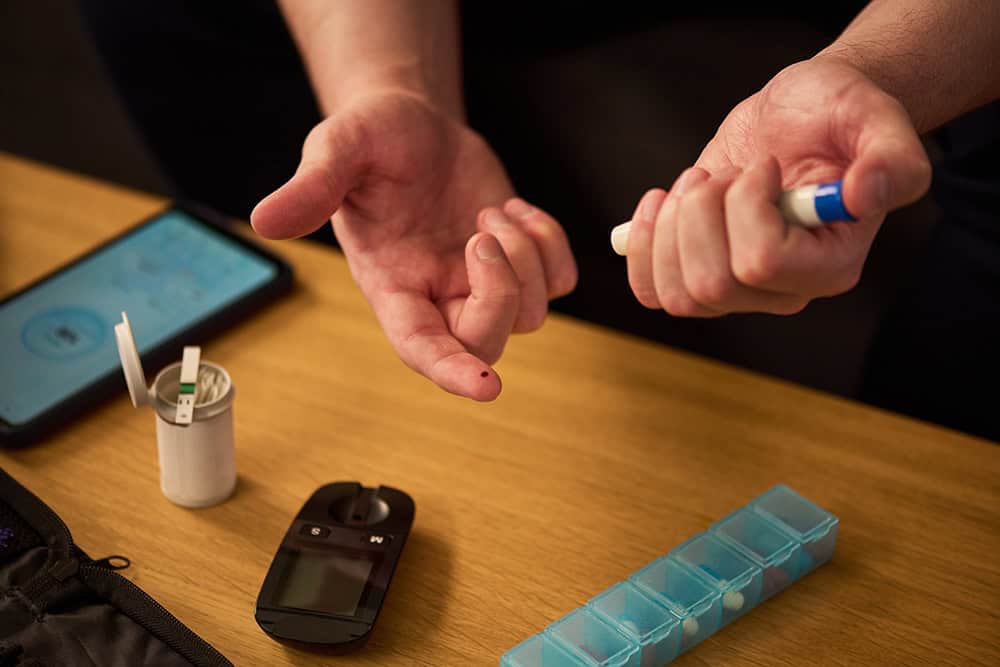
How obesity affects metabolic health
Obesity can contribute to insulin resistance, inflammation, and changes in fat-cell function. These changes make it harder for the body to regulate blood sugar and lipids effectively.
Over time, this can lead to:
- Prediabetes
- Type 2 diabetes
- High triglycerides
- Low HDL cholesterol
- Fatty liver disease
Obesity and type 2 diabetes
Obesity is a major cause of type 2 diabetes. Research has shown that the risk of diabetes rises substantially as body weight increases. In people with overweight, the risk may double; in mild obesity, it may quadruple; and in severe obesity, the risk may rise 10-fold [2,3].
Insulin resistance is one of the most important mechanisms behind this connection. It is a useful marker of metabolic risk in obesity.
Can weight loss help prevent diabetes?
Yes. A loss of about 5% of body weight may help prevent prediabetes from progressing to type 2 diabetes.
For patients with established diabetes, greater weight loss is often needed to produce deeper metabolic improvement. Research suggests that 10% to 25% or more body weight loss may improve diabetes substantially and, in some patients, lead to remission [4].
Obesity and dyslipidemia
Obesity is also associated with unhealthy cholesterol and triglyceride patterns. The most common changes include [5]:
Higher triglycerides
Lower HDL cholesterol
Increased small dense LDL cholesterol
Obesity is not typically associated with higher total LDL cholesterol overall. Instead, the lipid pattern tends to be more atherogenic, meaning it carries greater cardiovascular risk.
Can weight loss improve dyslipidemia?
Yes. Weight loss of 10% to 25% or more may significantly improve triglycerides and other aspects of metabolic health [6].
Obesity and fatty liver disease
Obesity is a major cause of metabolic dysfunction-associated fatty liver disease (formerly called non-alcoholic fatty liver disease), including MASLD and MASH. This condition can progress over time and, in some patients, lead to cirrhosis or liver cancer [7].
Fatty liver disease is common, affecting about 25% of adults in western countries, but it is also one of the metabolic problems most likely to improve with weight loss and early treatment.
How much weight loss helps fatty liver disease?
A weight loss of 10% or more may improve fatty liver disease [8]. Greater weight loss may further improve liver inflammation and increase the chance of resolution in selected patients.
Why earlier treatment matters
Metabolic disease often progresses gradually. The earlier obesity is addressed, the more likely it is that blood sugar, lipids, and liver health can improve before more serious complications develop.
This is one reason a structured medical approach can be so helpful. Many patients need more than advice alone. They need a plan that is realistic, individualized, and supported over time.
How our practice can help
Our self-pay telemedicine practice offers personalized obesity and sleep medicine care for patients who want a medically guided approach to weight loss and metabolic health.
We can help with:
- Medical weight management
- Prediabetes and diabetes prevention
- Type 2 diabetes improvement with excess weight loss
- Dyslipidemia management with excess weight loss
- Fatty liver disease risk reduction
- Nutrition and behavior support
- Anti-obesity medication management, when appropriate
- Sleep apnea screening and treatment planning
Take the next step
If you are concerned about weight, blood sugar, unhealthy lipids, or fatty liver disease, a telemedicine visit can be a practical first step. Many patients benefit from a treatment plan that focuses on both weight reduction and metabolic improvement.
Schedule a telemedicine visit today to discuss your goals and build a personalized plan.
Frequently asked questions
Obesity is one of the strongest risk factors for type 2 diabetes and is a major driver of insulin resistance.
A loss of about 5% of body weight may help prevent prediabetes from progressing to diabetes. How much weight loss is needed to improve diabetes, cholesterol, and fatty liver disease? Research suggests that 10% to 25% or more body weight loss may be needed for substantial improvement in these metabolic conditions.
Research suggests that 10% to 25% or more body weight loss may be needed for substantial improvement in these metabolic conditions.
Obesity is more strongly associated with high triglycerides, low HDL cholesterol, and increased small dense LDL, rather than higher LDL cholesterol overall.
Yes. Telemedicine can support long-term medical weight management, medication follow-up, and treatment of related metabolic conditions.
References
- GBD 2015 Obesity Collaborators, Afshin A, Forouzanfar MH, et al. Health effects of overweight and obesity in 195 countries over 25 years. N Engl J Med. 2017;377(1):13-27. https://pubmed.ncbi.nlm.nih.gov/28604169/ PubMed
- Kim KK, Haam JH, Kim BT, et al. Evaluation and treatment of obesity and its comorbidities: 2022 update of clinical practice guidelines for obesity by the Korean Society for the Study of obesity. J Obes Metab Syndr. 2023;32(1):1-24. https://pubmed.ncbi.nlm.nih.gov/36945077/ PubMed
- Wharton S, Lau DCW, Vallis M, et al. Obesity in adults: a clinical practice guideline. CMAJ. 2020;192(31):E875-E891. https://pubmed.ncbi.nlm.nih.gov/32753461/ PubMed
- Rosenstock J, Wysham C, Frías JP, et al. Efficacy and safety of a novel dual GIP and GLP-1 receptor agonist tirzepatide in patients with type 2 diabetes (SURPASS-1): a double-blind, randomised, phase 3 trial. Lancet. 2021;398(10295):143-155. https://pubmed.ncbi.nlm.nih.gov/34186022/ PubMed
- Neeland IJ, Lim S, Tchernof A, et al. Metabolic syndrome. Nat Rev Dis Primers. 2024;10(1):77. https://pubmed.ncbi.nlm.nih.gov/39420195/ PubMed
- Pirro V, Roth KD, Lin Y, et al. Effects of Tirzepatide, a dual GIP and GLP-1 RA, on lipid and metabolite profiles in subjects with type 2 diabetes. J Clin Endocrinol Metab. 2022;107(2):363-378. https://pubmed.ncbi.nlm.nih.gov/34608929/ PubMed
- Sanyal AJ. Past, present and future perspectives in nonalcoholic fatty liver disease. Nat Rev Gastroenterol Hepatol. 2019;16(6):377-386. https://pubmed.ncbi.nlm.nih.gov/31024089/ PubMed
- Vilar-Gomez E, Yasells-Garcia A, Martinez-Perez Y, et al. Development and validation of a noninvasive prediction model for nonalcoholic steatohepatitis resolution after lifestyle intervention. Hepatology. 2016;63(6):1875-1887. https://pubmed.ncbi.nlm.nih.gov/26849287/ PubMed
Take the next step
A telemedicine visit with Dr. Sangal can be a practical first step toward answers and a plan.
Self-pay · Telemedicine for residents of California, Massachusetts & Michigan